






New Zealand currently has three UNESCO World Heritage Sites and all of them draw hordes of visitors. It’s tough to rank them in terms of popularity or priority. So, we have simply tried to describe these sites here and leave it to the readers to pick their favourites.
Te Wahipounamu – South West New Zealand
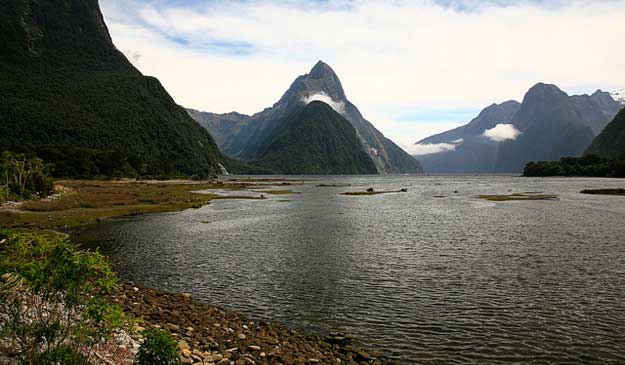
Fiordland National Park by Vašek Vinklát/ CC BY
Te Wahipounamu is a treasure trove of dramatic landscapes, shaped by fjords, rugged coasts, gorgeous lakes, and stunning waterfalls. Stretched across 2.6 million hectares, the world heritage area includes Fiordland National Park, Westland Tai Poutini, Mount Aspiring, and Aoraki/Mount Cook. The ice carved fjords, lakes, and valleys here are among the finest of landforms in the Southern Hemisphere. Besides these, the area boasts incredible flora and fauna that includes rare plants and animals. For example, the kea, which is the only alpine parrot specie in the world, is found here.
Tongariro National Park
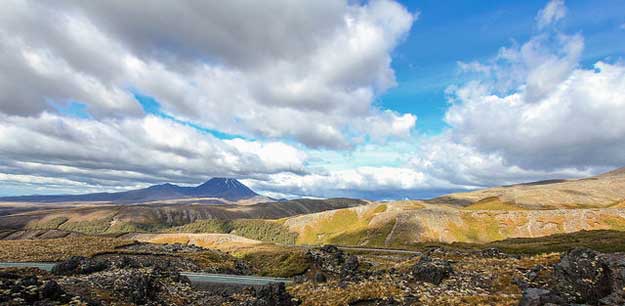
Tongariro National Park by katarina_dzurekova/ CC BY
From overwhelming herb fields to serene lakes to extinct volcanoes, Tongariro National Park features a diverse range of ecosystems that are unique to this place. The park is home to the three mountains – Ruapehu, the largest mountain in the North Island; Ngauruhoe, the youngest volcano; and Tongariro, a place of dramatic landscapes developed over the last 300,000 years. Maori people symbolize these mountains as spiritual links between their community and environment.
New Zealand Sub-Antarctic Islands
Comprising five southernmost island groups (the Snares, Bounty Islands, Antipodes Islands, Auckland Islands and Campbell Island), New Zealand Sub-Antarctic Islands are admired for the huge number and diversity of pelagic seabirds and of course, the penguins. The islands feature an incredible biodiversity that attracts a large number of nature lovers from all around the world. Over 125 bird species that include 40 seabirds inhabit these islands. Among them, there are eight species of seabirds that breed nowhere else in the world. The islands are also a breeding hub for more than 95% of the total population of New Zealand’s sea lions.